Choose The Right Type Of Monitoring
Asbestos air testing in Manchester measures airborne fibres under specified sampling conditions. It may be used to support planned asbestos work, investigate concerns or form part of a clearance process. The purpose needs to be agreed first because sampling locations, timing and interpretation depend on the question being asked.
Background, leak, personal and reassurance monitoring serve different purposes. They should not be treated as interchangeable labels for the same test. Explain what has happened, whether removal is taking place and who needs to rely on the result so that an appropriate analytical brief can be prepared.
Air Testing Is Not Material Identification
An air test does not establish whether a particular ceiling, floor or wall contains asbestos. That question needs suitable material sampling and analysis. An airborne fibre result also does not provide a permanent assurance about a space, because later disturbance or a change in conditions can alter what is in the air.
For a concern about an intact suspect product, begin with asbestos material testing or a suitably scoped survey. For a concern after damage, restrict access and arrange competent advice. Sampling should form part of the assessment rather than becoming a reason to enter or clean a potentially contaminated area.
Analytical Standards And Independence
HSE’s Asbestos: The Analysts’ Guide, HSG248, provides the technical guidance for asbestos analytical work. Laboratories carrying out relevant asbestos air measurements require appropriate UKAS accreditation to ISO/IEC 17025 under the Control of Asbestos Regulations 2012. Buyers should verify that the proposed work falls within the laboratory’s scope.
Where clearance is needed after licensed enclosure work, an independent analyst provides an important separation from the removal operation. Ask who is commissioning the analyst, what stages are included and how reports will be issued. Keep the analytical appointment aligned with the removal programme so the work is ready for inspection.
How Air Monitoring Is Planned
Begin by sharing survey findings, the removal specification or an account of the incident. Include the location, occupancy, site controls and any work already completed. The analyst can then determine suitable monitoring arrangements and identify information missing from the brief before sampling is scheduled.
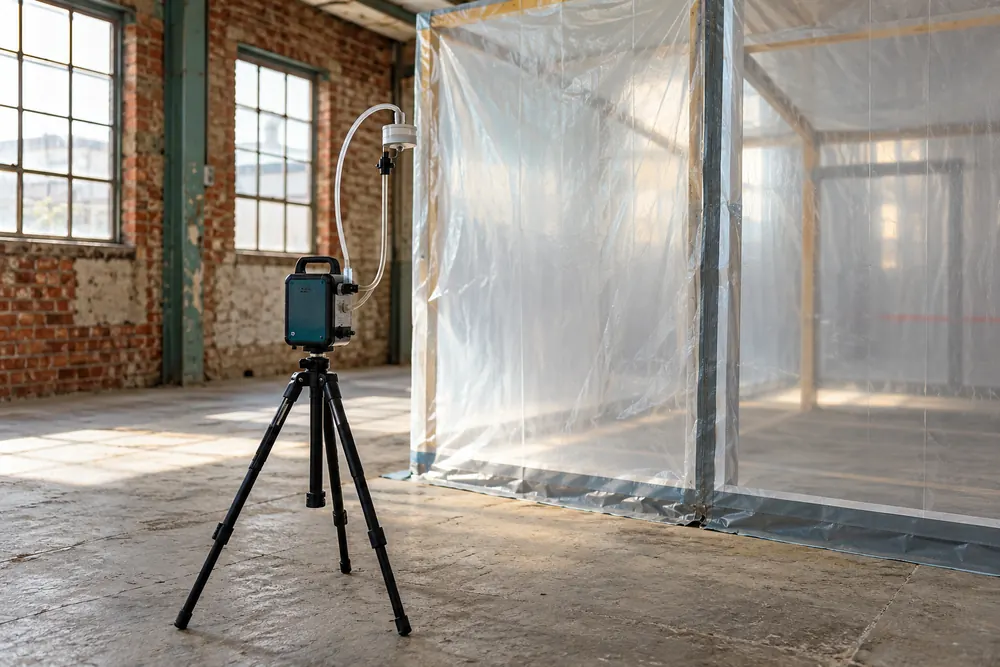
During monitoring, sampling equipment is positioned and operated to the agreed method. The report should identify the sampling locations, purpose, conditions and results. Interpretation should be tied to that scope, including any limitations, rather than reduced to an unexplained statement that a building has passed a test.
Four-Stage Clearance Explained
Following relevant licensed enclosure removal, four-stage clearance includes a preliminary check of the site and job completion, a thorough visual inspection, clearance air monitoring and a final assessment after enclosure dismantling. Each stage needs to meet its criteria before the process can be completed. Air sampling alone is not the whole clearance.
A certificate of reoccupation records successful completion of that process for its defined area. It should be retained alongside removal and waste records. If inspection identifies outstanding cleaning or other issues, those need resolving before clearance can proceed, so programme flexibility should be discussed when the job is being planned.
What Affects Air Testing Cost
Air testing cost depends on the monitoring purpose, number and position of sampling points, site attendance and analytical work involved. A planned reassurance visit is different from attendance throughout removal activities or a full clearance appointment. Travel between separate buildings and access restrictions can also affect the quotation.
Ask whether the quotation includes the required report, clearance stages where applicable and any return attendance. Confirm what happens if the site is not ready when the analyst arrives. Comparing like-for-like scopes is more useful than comparing a price per sample without understanding the work that surrounds the sampling.
Using Results In A Building Decision
Read the report with the survey or incident information rather than in isolation. A result reflects the conditions during sampling and should be considered alongside the visual findings and work history. Ask the analyst to explain any uncertainty before reopening an area or authorising further disturbance.
For planned projects, our removal guide explains the wider sequence and handover. For occupied buildings, keep analytical records with the asbestos management information and record why monitoring was commissioned. This gives future readers the context to understand what the test did and did not establish.