Start With The Material And The Risk
Asbestos removal in Manchester can involve anything from a small cement outbuilding to insulation materials inside commercial premises. Those jobs require different controls. Before deciding how work should proceed, the material, its condition, location and likelihood of fibre release need to be assessed by a competent person.
Finding asbestos does not automatically mean that immediate removal is the right response. Intact material that will remain undisturbed may be suitable for management in place. Removal becomes a different consideration when a material is damaged, cannot be protected or sits in the path of planned refurbishment or demolition.
Licensed And Non-Licensed Work
Under the Control of Asbestos Regulations 2012, some asbestos work requires an HSE-licensed contractor. The decision depends on the material and the work, rather than the property owner’s preference or the size of a quote. HSE guidance on licensable work explains the distinction.
Non-licensed work still needs a suitable risk assessment, trained workers and the right controls. Some non-licensed work is notifiable and carries extra requirements. A cement sheet should never be assumed to be a simple job without checking its condition, the removal method and the surrounding work area.
Before A Removal Quote
Provide your survey report and laboratory results, together with a description of the work you want completed. Include photographs taken from a safe position, access restrictions and details of occupied adjoining spaces. Do not break a piece off or move a damaged item just to improve the photograph.
A removal specification should separate asbestos work from replacement roofing, rebuilding and decorating. Ask who is arranging access equipment, isolations, any required notifications, analytical attendance and waste documentation. These interfaces matter when a builder or roofer is waiting to continue the wider project after the asbestos work finishes.
The Removal Process
The process begins with review of the available information and a suitable assessment of the site. A contractor then prepares a plan of work, identifies the correct work category and agrees controls and sequencing. Where a notification period applies, it needs to be allowed for in the programme before a start date is confirmed.
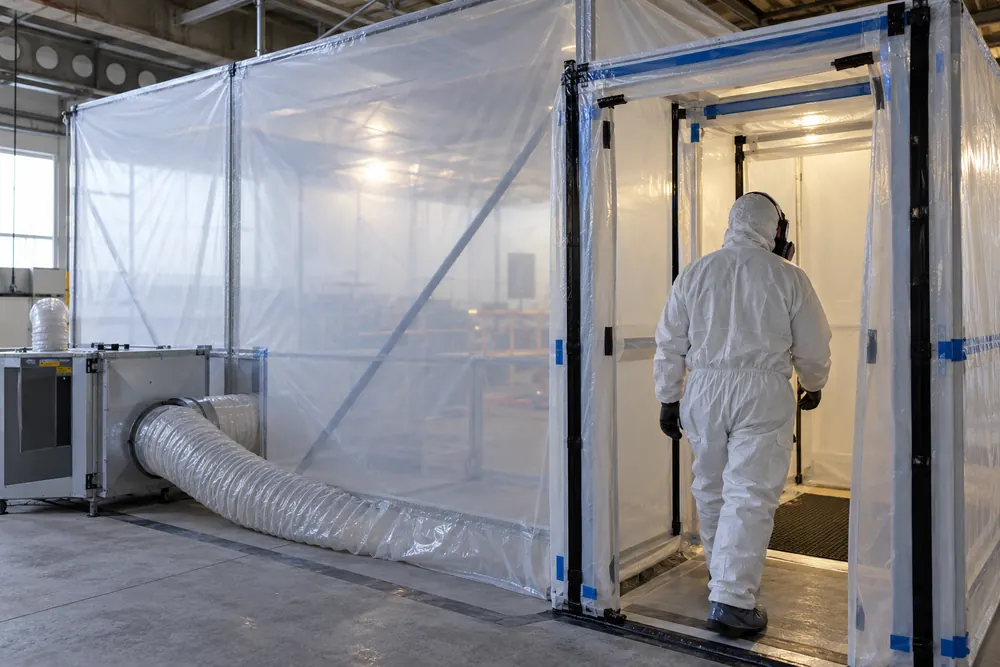
The working area is prepared and separated as required by that plan. Removal, cleaning and waste handling follow the assessed method, with appropriate protective equipment and decontamination arrangements. At completion, the relevant checks and handover records are provided before the area is released for its agreed next use.
Clearance And Handover
For licensed enclosure work where applicable, an independent UKAS-accredited analyst undertakes the four-stage clearance process and issues a certificate of reoccupation when the criteria are met. Air sampling is one part of that process. It does not replace the thorough visual assessment and other clearance stages.
Ask for the completion records that apply to your specific job, rather than a generic promise of a certificate. Keep the waste paperwork and update the asbestos register to reflect what has been removed and what remains. Our air testing guide explains analytical work in more detail.
What Affects Removal Cost
Removal cost depends on the type and quantity of material, its condition and the controls needed to remove it. Height, restricted access, enclosure arrangements, decontamination facilities, waste volume and neighbouring occupation can all affect the scope. An allowance for analytical work may also be needed, depending on the job.
Compare written quotations against the same specification. Check whether disposal, access equipment and any reinstatement are included, and ask how unexpected materials will be handled. A price without a clear scope can be difficult to compare and may leave important parts of the project outside the agreed work.
If You Discover Damaged Material
If you suspect a material has been disturbed, stop work and keep people away from the affected area. Do not sweep debris, use an ordinary vacuum cleaner or attempt to clean up before competent advice. Restrict access without touching the suspect material and tell the person responsible for the property.
An enquiry should describe what happened, the material’s location and whether anyone has already carried out work there. Our asbestos survey service can help establish the information needed for planned work. Where the issue concerns already detached waste, read about asbestos disposal arrangements before organising collection.