What Asbestos Testing Tells You
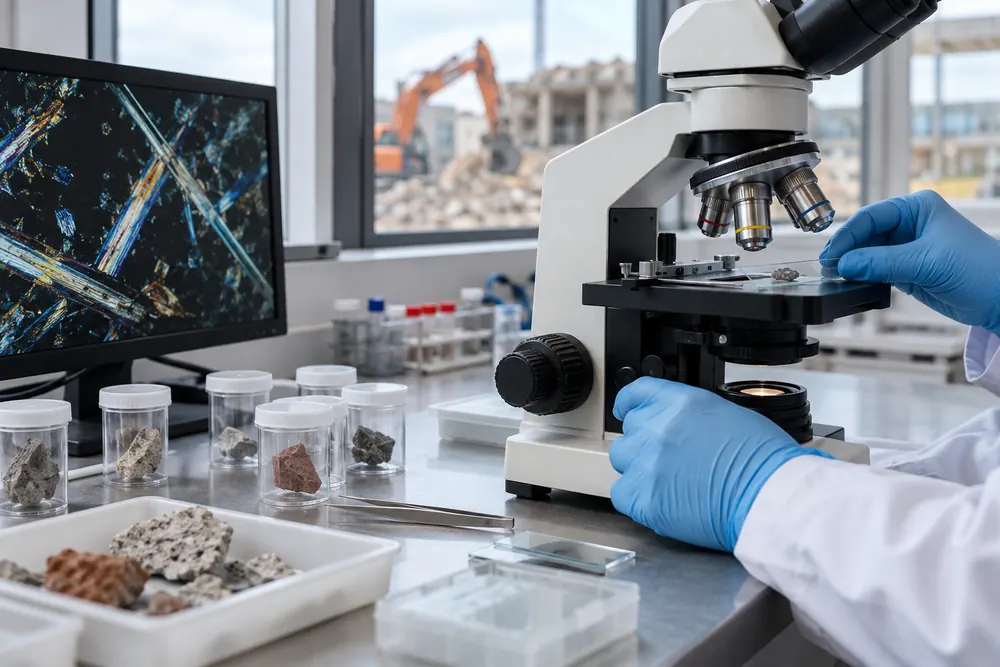
Asbestos testing checks whether a sample of suspect material contains asbestos. It can help answer a focused question about a ceiling coating, floor finish, panel or other building product. Appearance alone cannot reliably confirm the content, and a photograph cannot replace appropriate laboratory analysis.
The result applies to the material actually sampled. It does not automatically clear a whole room, every similar panel or the rest of a property. Before arranging testing in Manchester, describe where the material is, what you intend to do and whether there are other finishes or layers that could be disturbed.
When Targeted Testing Makes Sense
Targeted sampling may suit a clearly defined concern where a specific material needs identifying. If you are removing a kitchen, altering a shop or rewiring a building, the question is broader than one sample. A survey scoped to the proposed work may be needed to investigate all affected materials.
Different layers in an apparently single surface may need separate consideration. A modern floor covering can conceal older finishes or adhesive, and a later partition may sit against an older lining. Share the planned disturbance before agreeing a sample count so that the investigation matches the practical decision you need to make.
Laboratory Standards
The Control of Asbestos Regulations 2012 require appropriate accreditation for asbestos analysis. HSE identifies UKAS accreditation to ISO/IEC 17025 as the recognised route for laboratories undertaking this work in Great Britain. Check the laboratory’s published scope for the analysis being commissioned, rather than relying on a logo alone.
HSE’s guidance on analysts and surveyors explains why trained, competent people should undertake sampling and analysis. Sampling itself can release fibres. The person visiting needs a suitable method, controls and arrangements for dealing with the sample point, based on the material and its condition.
How Sampling And Analysis Work
First, provide the address, material location and reason for testing. Existing reports, room plans and photographs taken without disturbance can help define the visit. Agree which materials are included and whether any areas need to be isolated or made accessible before the sampler arrives.
A competent person assesses the material and takes a representative sample using suitable controls. Each sample is identified and sent for laboratory analysis with its location recorded. The resulting report should connect the laboratory finding to the exact material sampled so that the answer can be used correctly.
Understanding A Positive Or Negative Result
A positive result identifies asbestos in the submitted sample. It does not, by itself, measure the risk to occupants or decide whether removal is necessary. Condition, accessibility and the chance of disturbance need to be considered alongside the result when deciding how to manage the material.
A result reporting no asbestos detected should also be read within its limits. It relates to the sample and analytical method, rather than unseen layers or unsampled materials. If the result appears inconsistent with the building information, discuss the concern with the surveyor before letting building work proceed.
What Affects Testing Cost
Testing cost depends on the number of distinct materials, the sampling visit, access requirements and the laboratory service agreed. A visit to one accessible surface differs from a programme of samples across separate floors or buildings. Specialist access and restrictions on occupation can also affect the quotation.
Ask whether the price covers sampling, analysis and a clear written record of locations. Confirm how findings will be explained and whether any wider inspection is included. Laboratory analysis alone and a building survey are different services, so compare quotations on their actual scope rather than the headline sample count.
Preparing For The Visit And Next Steps
Keep the suspect material intact while the visit is being arranged. Do not scrape, sand, drill or sweep it, and avoid moving loose fragments. Let the sampler know about restricted access, fragile surfaces or previous disturbance so that the visit can be planned before anyone enters the area.
After testing, keep the report and share relevant findings with the people responsible for the work. If the material needs a broader assessment, consider an asbestos survey in Manchester. Where removal is proposed, use the result to inform the removal specification rather than treating a positive sample as a complete plan of work.